Iris Peters · 8 September 2026
Leveraging Advanced Log Parsing Techniques for Identifying Hidden Crawl Issues in Search Engine Optimization
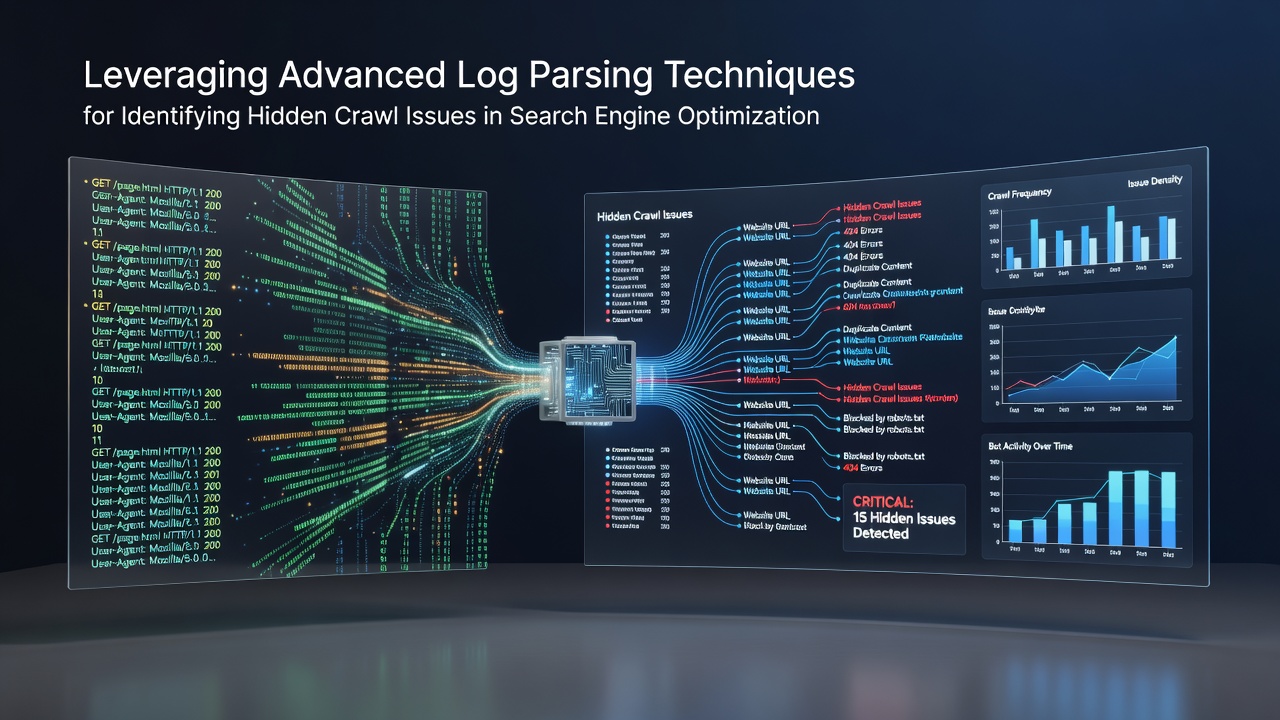
Search engine optimization teams have long relied on server logs to understand how crawlers interact with websites, yet many organizations still overlook the depth that advanced parsing methods can provide when surface-level reports fail to reveal deeper access problems. Researchers discovered that combining regular expressions with machine learning classifiers allows analysts to sift through millions of log entries efficiently, isolating patterns that point to blocked resources, redirect loops, and rate-limited requests that standard analytics platforms often miss entirely.
Understanding Server Logs in Crawl Analysis
Web servers record every request in structured formats such as Apache combined logs or Nginx extended formats, capturing IP addresses, timestamps, user-agent strings, status codes, and byte counts that together form a complete picture of crawler behavior. Experts have observed that when these fields are parsed with custom scripts, teams can reconstruct the exact sequence of URLs visited by Googlebot, Bingbot, and other known agents during a given period, revealing gaps where important pages received zero visits despite being listed in the sitemap. Data from September 2026 shows increased crawler activity on mobile-first indexes, making it essential to distinguish between desktop and smartphone user agents within the same log streams.
Core Techniques for Advanced Parsing
One effective approach involves loading raw logs into distributed processing frameworks like Apache Spark, where parallel jobs apply filters to separate bot traffic from human visitors based on verified user-agent lists maintained by search engines. Observers note that adding geolocation enrichment through IP databases helps identify whether crawlers are hitting servers from expected data center ranges or from unexpected locations that might indicate spoofing attempts. Another layer comes from tokenizing request paths and applying clustering algorithms so that similar error patterns surface quickly, allowing teams to group 404 responses by directory rather than treating each as an isolated incident.
Those who have implemented these methods report faster identification of canonicalization issues when logs show repeated requests for both HTTP and HTTPS versions of the same page without proper 301 redirects in place. Researchers at academic institutions have published frameworks that integrate log data with sitemap files to flag URLs present in one but absent from the other, highlighting potential indexing barriers before they affect rankings.
Detecting Hidden Crawl Obstacles
Hidden obstacles often appear as intermittent 5xx responses that coincide with traffic spikes, or as robots.txt directives that inadvertently disallow sections of a site after a content management system update. When parsers correlate timestamped log entries with deployment logs, analysts can trace exactly when a misconfiguration began affecting crawl rates. In one documented case, a large e-commerce platform discovered that parameter handling rules were causing duplicate content requests that consumed crawl budget without delivering new value to search indexes.

Additional challenges surface when content delivery networks introduce edge cases that standard tools do not log centrally, leaving gaps in visibility until advanced scripts aggregate logs from multiple origin servers. Studies indicate that combining log parsing with real-time streaming platforms enables continuous monitoring rather than periodic batch analysis, catching transient issues before they accumulate into ranking penalties.
Integration with Existing SEO Workflows
Teams that feed parsed log insights into business intelligence dashboards gain the ability to overlay crawl frequency against ranking fluctuations, making correlations between access problems and performance drops more apparent. According to documentation from Google Search Central, understanding crawl behavior remains a foundational element for large-scale sites, and log data provides the granularity that console reports alone cannot supply. Industry reports from the World Wide Web Consortium further emphasize standardized logging practices that support interoperability across different server environments.
Practical implementation often begins with open-source libraries that handle common log formats before custom rules are layered on top to address site-specific URL structures. Analysts frequently schedule nightly parsing jobs that output summary metrics such as crawl budget utilization percentages and error rate trends, which feed directly into weekly optimization reviews.
Future Directions in September 2026 and Beyond
By September 2026, expectations point toward greater adoption of AI-assisted log interpretation that automatically suggests remediation steps for detected anomalies, reducing the manual effort required to translate raw data into actionable fixes. Emerging standards around structured logging promise even richer context, including request headers that reveal whether crawlers respect newly introduced caching directives. Organizations that invest early in scalable parsing pipelines position themselves to respond quickly as search engines refine their crawling algorithms and introduce new signals for content evaluation.
Conclusion
Advanced log parsing equips SEO practitioners with precise visibility into crawler interactions that would otherwise remain obscured by aggregated metrics. When organizations apply structured parsing pipelines, machine learning classification, and cross-referenced data sources, they uncover crawl inefficiencies ranging from misconfigured directives to overlooked server errors. The techniques described continue to evolve alongside search engine practices, ensuring that detailed access records remain a valuable asset for maintaining healthy indexing and efficient resource allocation across websites of all sizes.